Belur

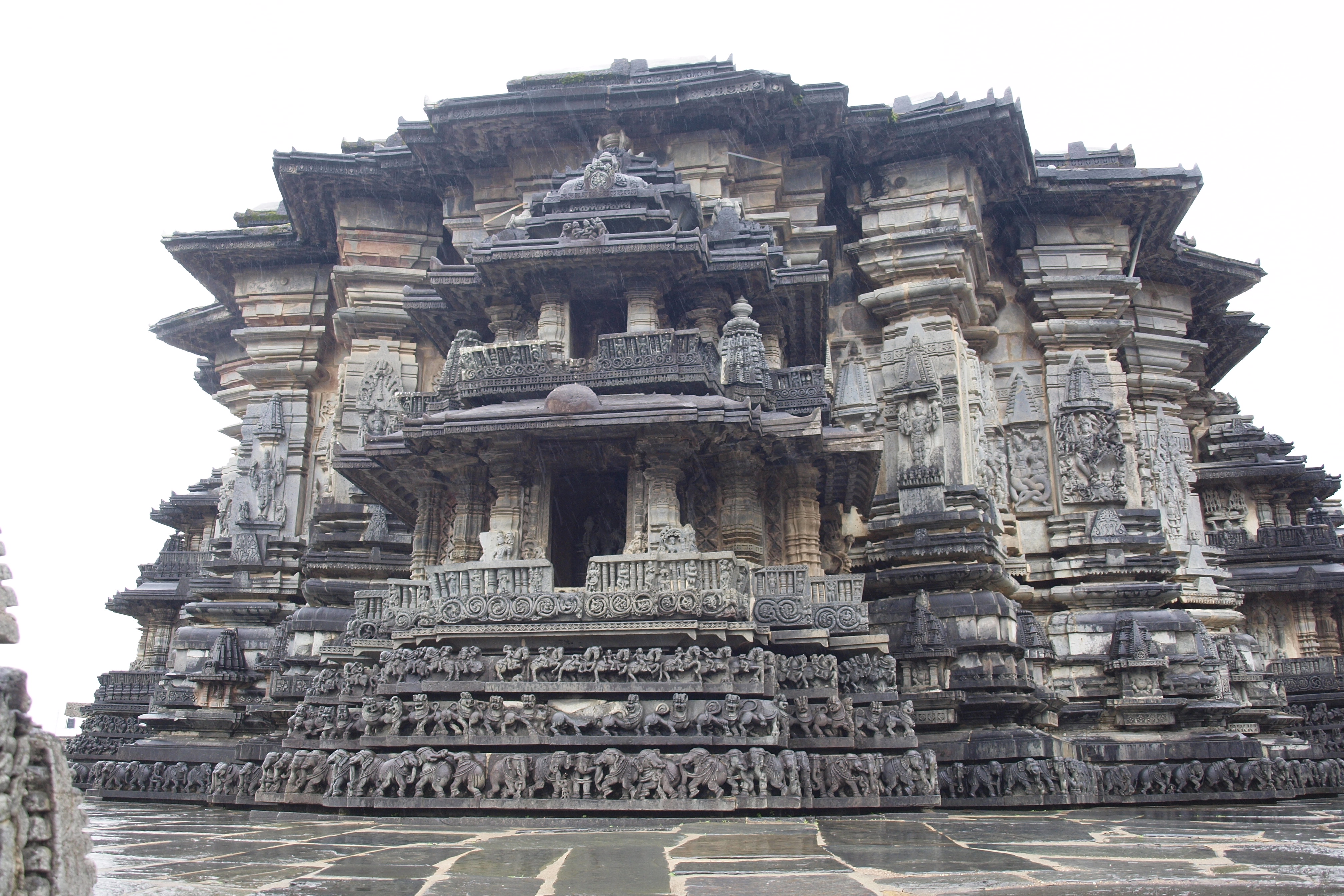
The Temple of Belur (along with its nearby neighbor, Halebeedu) is considered an “outstanding example of Hindu architecture” and the “Supreme Climax of Indian Architecture,” among other praises. It is extraordinary.
OLYMPUS DIGITAL CAMERA

It is also an active temple, which people still visit for religious purposes. People like our newest little acquaintance, Nikta:
OLYMPUS DIGITAL CAMERA

Belur was the capitol of the Hoysala Kings (who also built the Keshava Temple at Somnathapur, see my earlier post). And, as I’ve previously mentioned, the Hoysala were an important dynasty in Southern India from the 10th through the 14th centuries. At the peak of their reign, they controlled the entire area now know as the state of Karnataka, plus parts of the neighboring states of Kerala, Tamil Nadu and Andhra Pradesh.

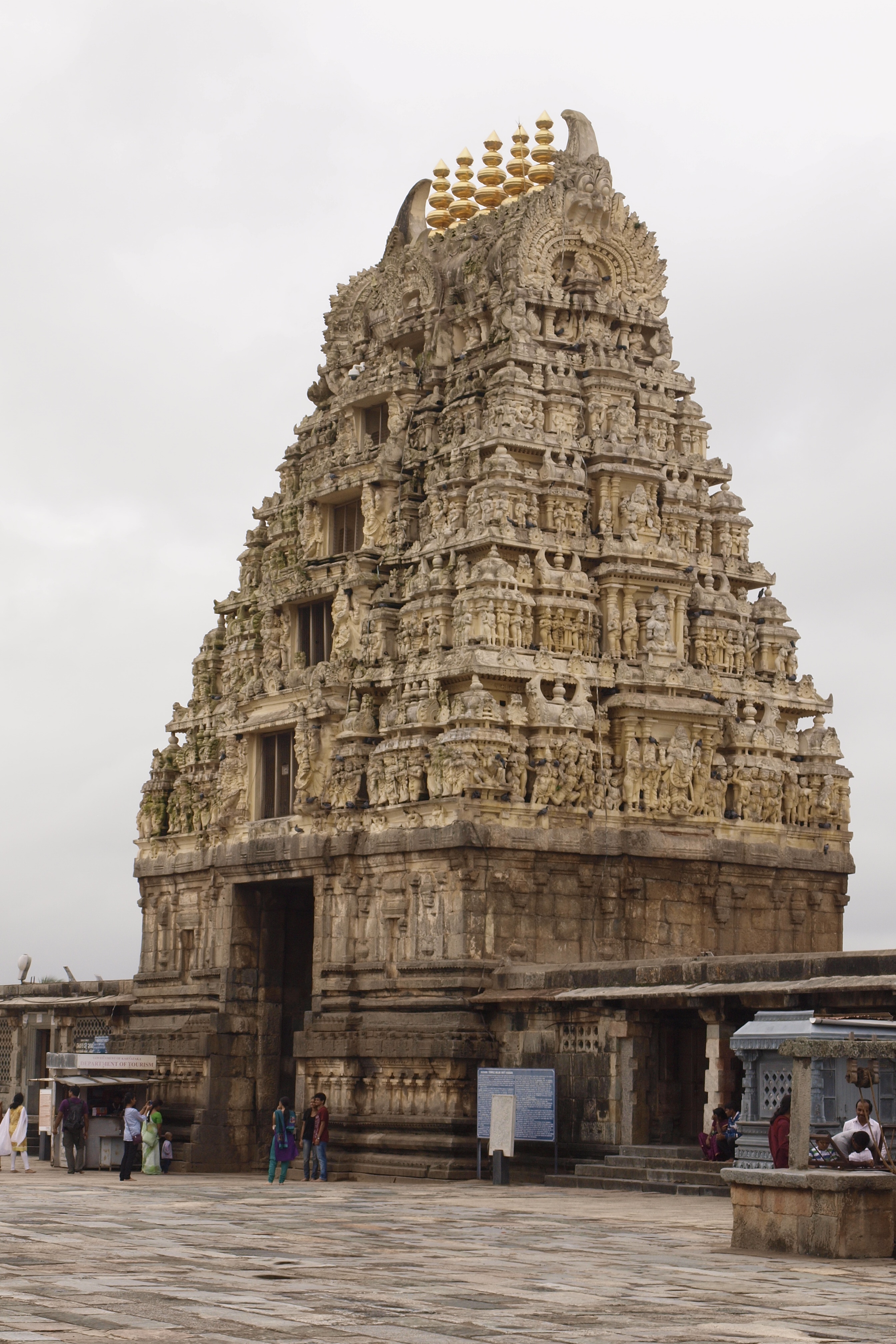
It is generally thought that the main temple, the Temple of Chennakeshava, marks the conversion of one of the Kings from Jainism (e.g., the people who built Gomata) to Vaishnavism (that branch of Hinduism that focus on Vishnu). There is also a competing theory that it celebrates the Hoysala victory over the rulers of Mysore. The temple was built in 1116, but the entire complex was constructed over 103 years. (Now that’s a construction schedule!) The architects who worked here developed their own style, known as the Karanatak Dravida. (See my earlier post about Chamundeshwai Temple in Mysore, which has a gopuram in this style, too.) This is the Belur gopuram:
OLYMPUS DIGITAL CAMERA

In front of the temple is the gravity pillar: 40+ feet tall, self supported and monolithic.
OLYMPUS DIGITAL CAMERA
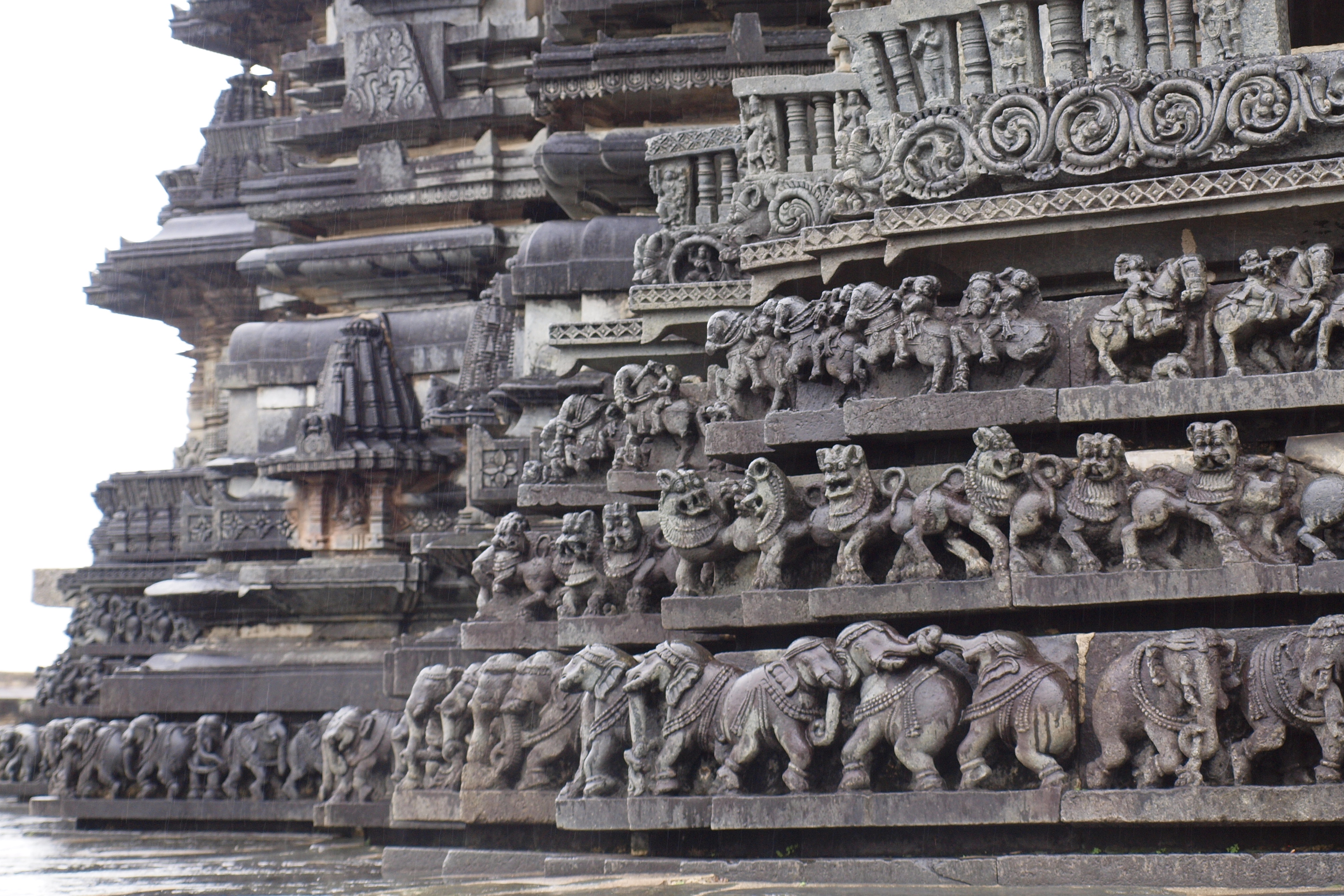
The temple sits on a base in the shape of a star and the exterior is craved in amazing detail. There are bands of elephants, lions, mounted horses, dancers, musicians, etc.
OLYMPUS DIGITAL CAMERA

OLYMPUS DIGITAL CAMERA

OLYMPUS DIGITAL CAMERA
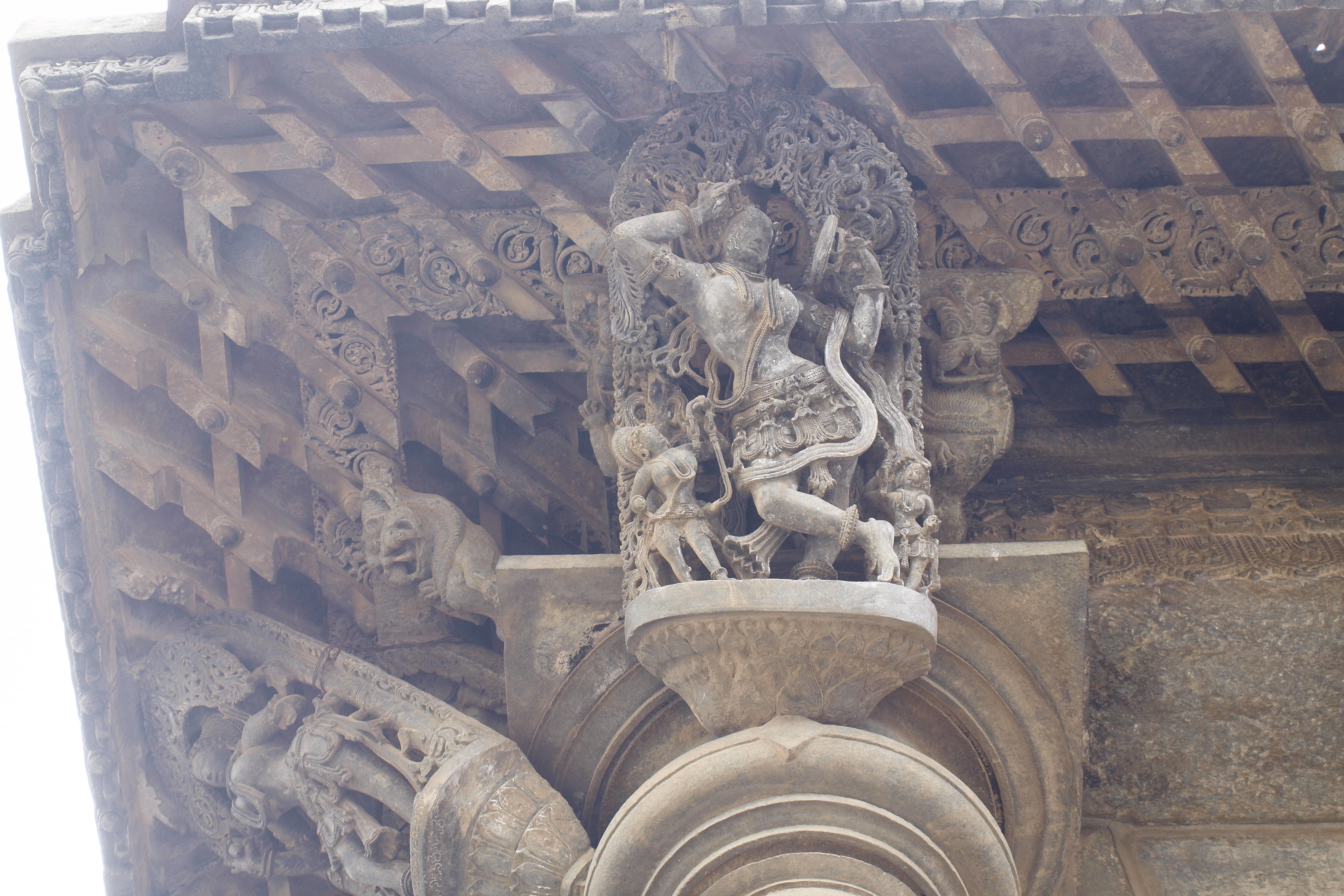
(This one has a donkey-headed woman, who is nonetheless celebrated as lovely)
OLYMPUS DIGITAL CAMERA

OLYMPUS DIGITAL CAMERA

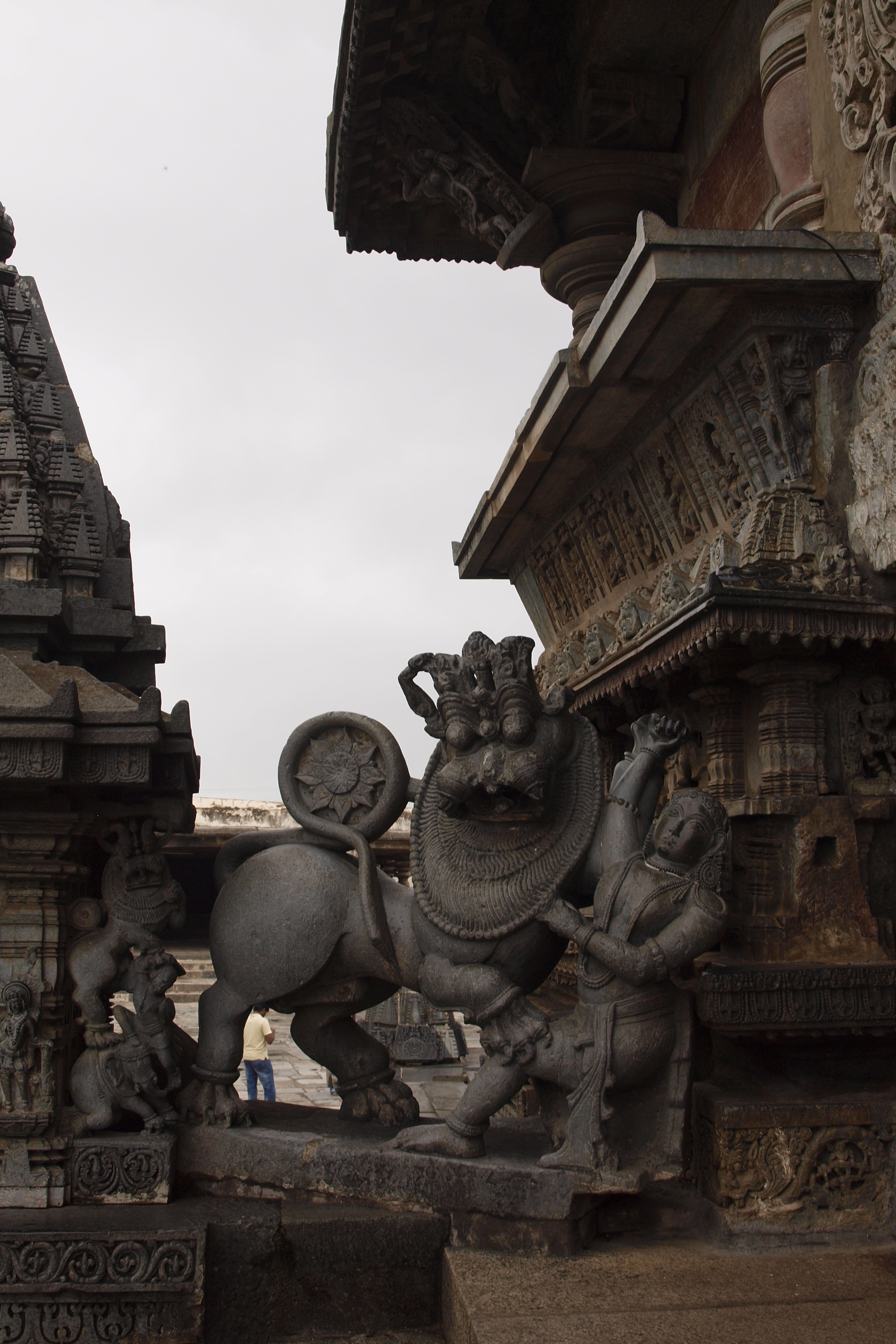
At the entrances, there are depictions of the “crest” of the Hoysala Kings: Sala (the first king) famously killing a tiger.
OLYMPUS DIGITAL CAMERA

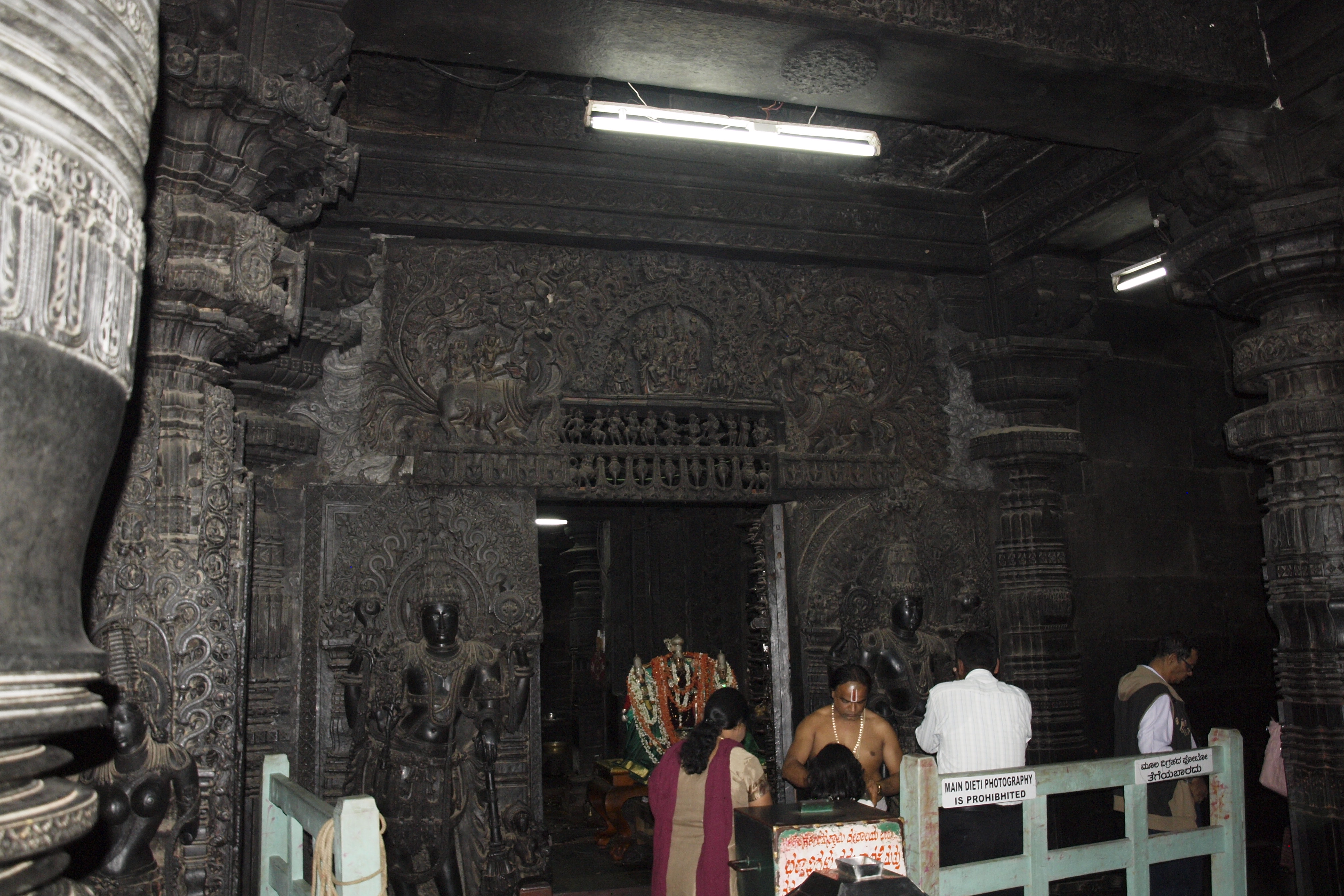
Inside there are more of the smooth, lantern shaped columns seen at other temples, as well as some really lacy ornate ones, too. The lotus-inspired ceiling is breath-taking. There is only one idol in the main temple, that of Keshava (one of Vishnu’s 24 forms) — but you are not allowed to photograph the main idol.
OLYMPUS DIGITAL CAMERA

OLYMPUS DIGITAL CAMERA

There are several smaller temples around the main one. This is the temple chariot with some other ceremonial animal figures:
OLYMPUS DIGITAL CAMERA

Leave a comment

Filed under Uncategorized

Jasmine

Next to any temple, you’ll find small florists who specialize in garlands and other flowers for offerings and ceremonial uses (see some examples in my earlier “Car Puja” post). You can buy flowers for religious purposes or just to take home.

I am a fan of the simple white strings of jasmine. You buy them by the “hand” (a new and rather subjective unit of measure to me; it means the seller’s hand and not my super-sized American hand). They have been costing around 10, 15, or 20 rupees a hand <$0.40), depending on weather (cheaper after a thunder storm) and day (apparently they can be significantly more expensive on religious holidays).

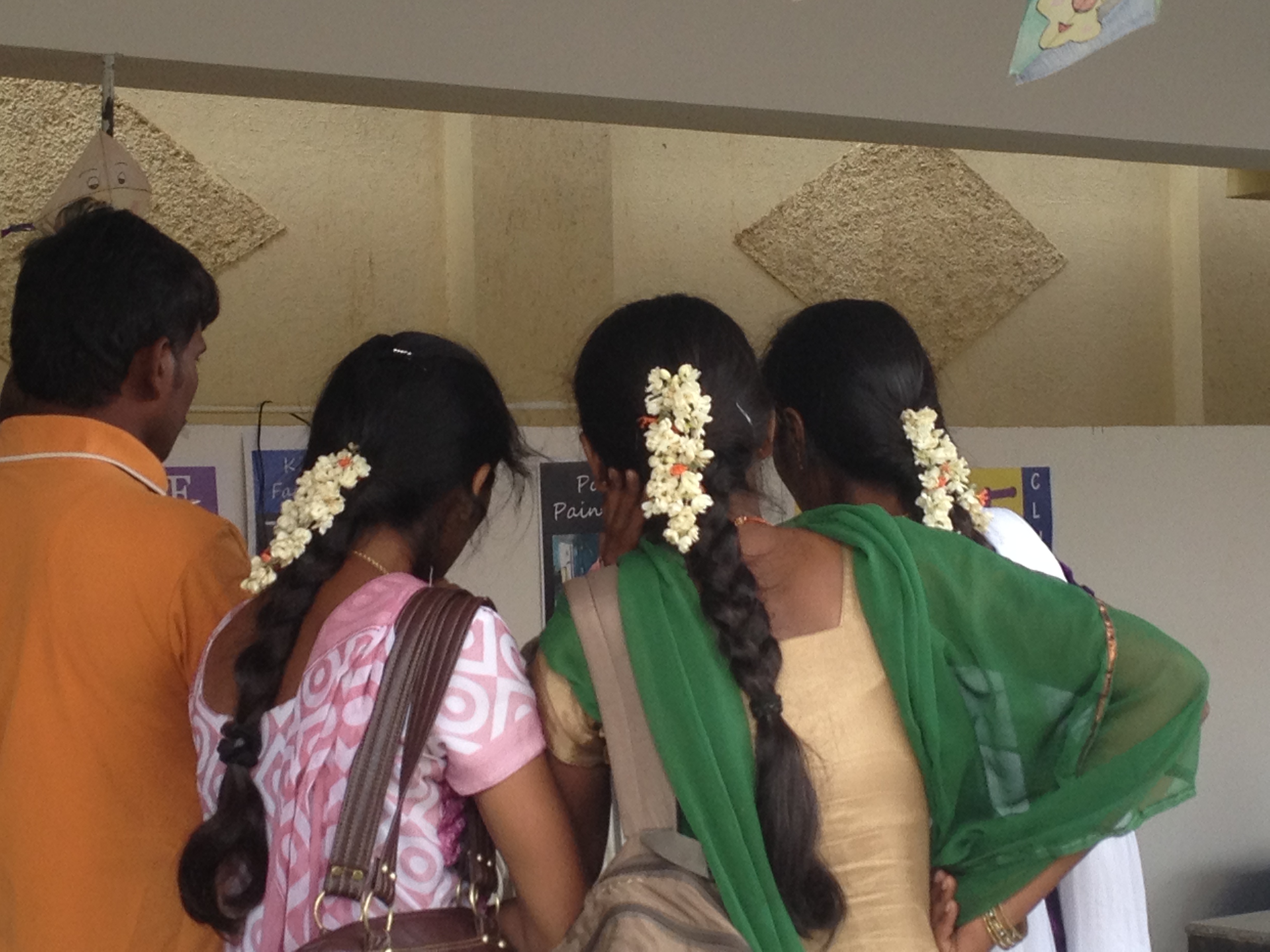
I've seen ladies drape several hands of jasmine string in the hair at the base of a ponytail or top of a braid. I rode an elevator with someone who did this and she smelled so terrific! (I'm told this hair ornamentation is a rather old fashion style and kids these days don't want to sport the look. Such a shame.)
Jasmine.hair
C coils then up around the Ganesh on the dashboard of the car (I guess it is an offering to Ganesh AND an air fresher!). Much better than the pine trees hanging from rear view mirrors of NYC taxis!

They can also be floated in a bowl water as an air freshner/ flower arrangement. There is nothing like coming home to the scent of fresh jasmine…
IMG_2273

2 Comments

Filed under Uncategorized

Gomatesvara

20130715-071517.jpg
Gomatesvara, at 56 ft tall, is one big nekkid man. And he’s said to be the tallest monolithic statute in Asia — i.e., carved from a single rock. Moreover, he represents “the highest value of life, renunciation selflessness.” Gomata (aka Lord Bahubali, son of the first Jain Tirthankara Vrishaba Deva) stands atop a mountain in Sravanabelagola (a village west of B’lore), overlooking a “tank” (square, man made reservoir). In fact, the village name derives from the tank, “bela-kola” means white pond.

20130715-072006.jpg
It’s very lovely – and quite the hike to scale the mountain to get to the top to view the statute. One must climb 641steps carved into the rock face. You can see the path winding up the mountain and glimpse Gomata standing serenely at the top (behind the big tree) from this photo:

20130715-072528.jpgAnd here is what the steps look like up close:

20130715-073039.jpg
This whole mountain is a holy Jain* site, hence the climb must be done barefoot. But for those who do not which to hike you can hire 4 men to carry you up on a chair attached to poles, called a “doli” (which seemed even more life threatening than the uphill hike, in my estimation).
OLYMPUS DIGITAL CAMERA

The site has been a holy place since 3rd Century BC, but the colossus was finished in 981AD. As I understand the story: Gomata and one of his brothers (the properly acknowledged hire) fought mightily over who would rule the kingdom. Even though he won, Gomata couldn’t bear hurting his brother, so he ended giving his brother the kingdom and went off to meditate. He stood still for so long in this yoga pose that ants built hills at his feet and vines started to grow on him. But he was still unsettled, since he was on what was now his brother’s land. One day his brother came by and acknowledged that the land was really his (Gomata’s) — in some versions it is said the brother actually returns the land– and in that moment Gomata attains enlightenment/Nirvana. (I am still a little blurry about which brother retained the property rights to the kingdom, but I suppose this doesn’t matter to someone who has attained Nirvana…)

*Jains accept the whole Hindu “pantheon”, but focus on the divine in humanity.

2 Comments

Filed under Uncategorized

Brindavan Gardens

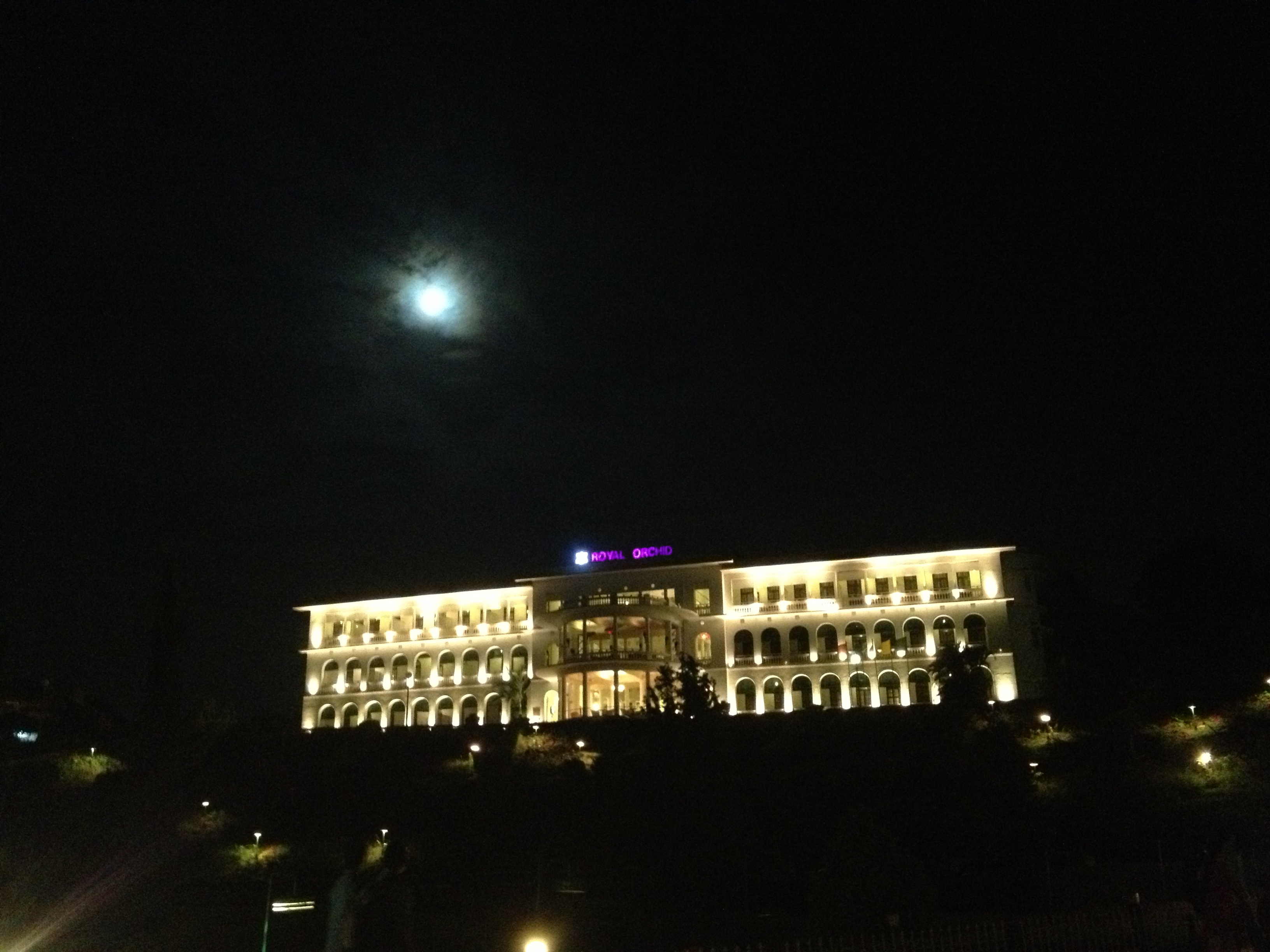
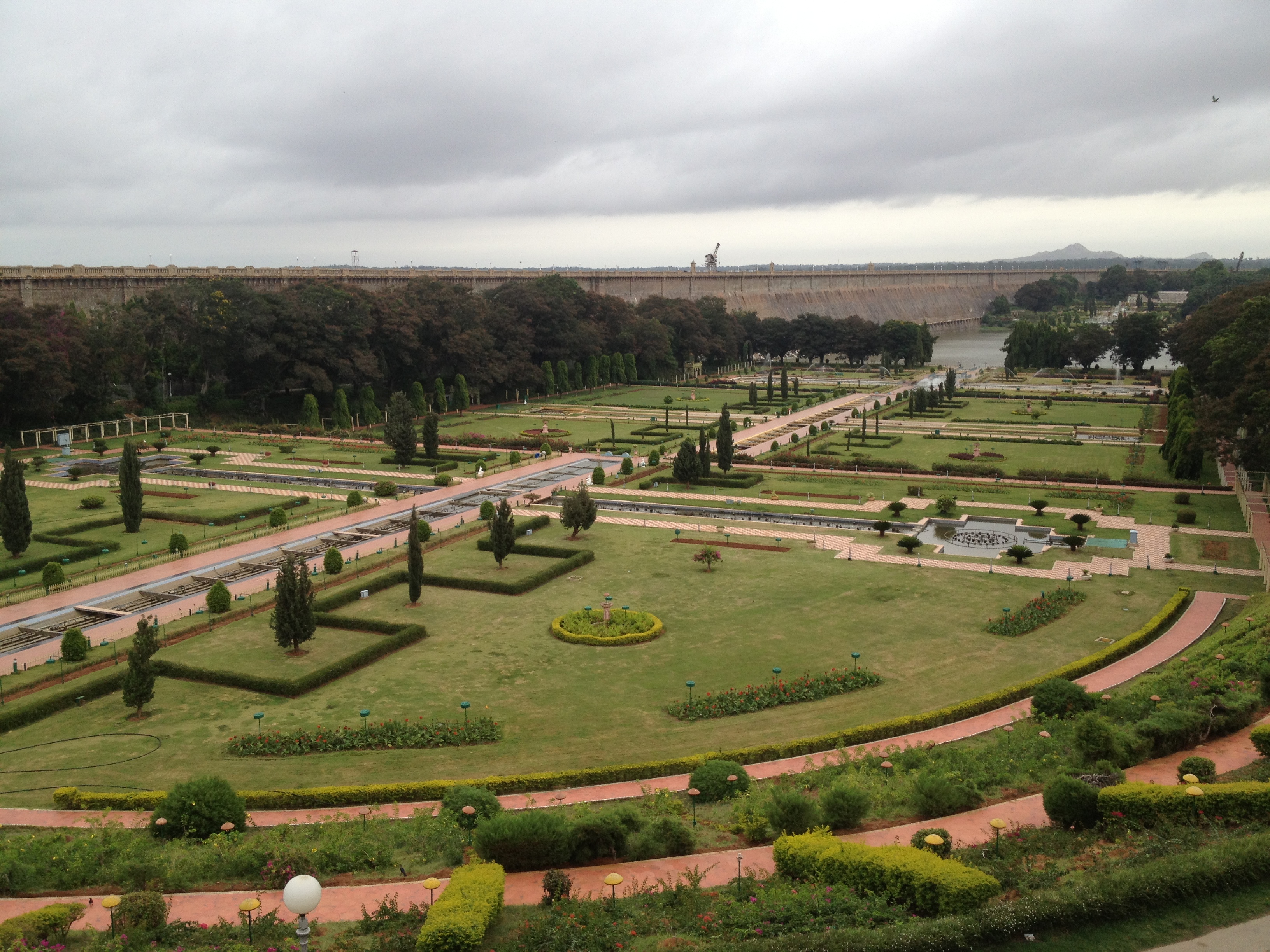
We spent one night just outside of Mysore at a historic hotel overlooking the Cauvery dam and Brindavan Gardens. This hotel was built by the Mysore Maharaja in to house guests.
IMG_2432
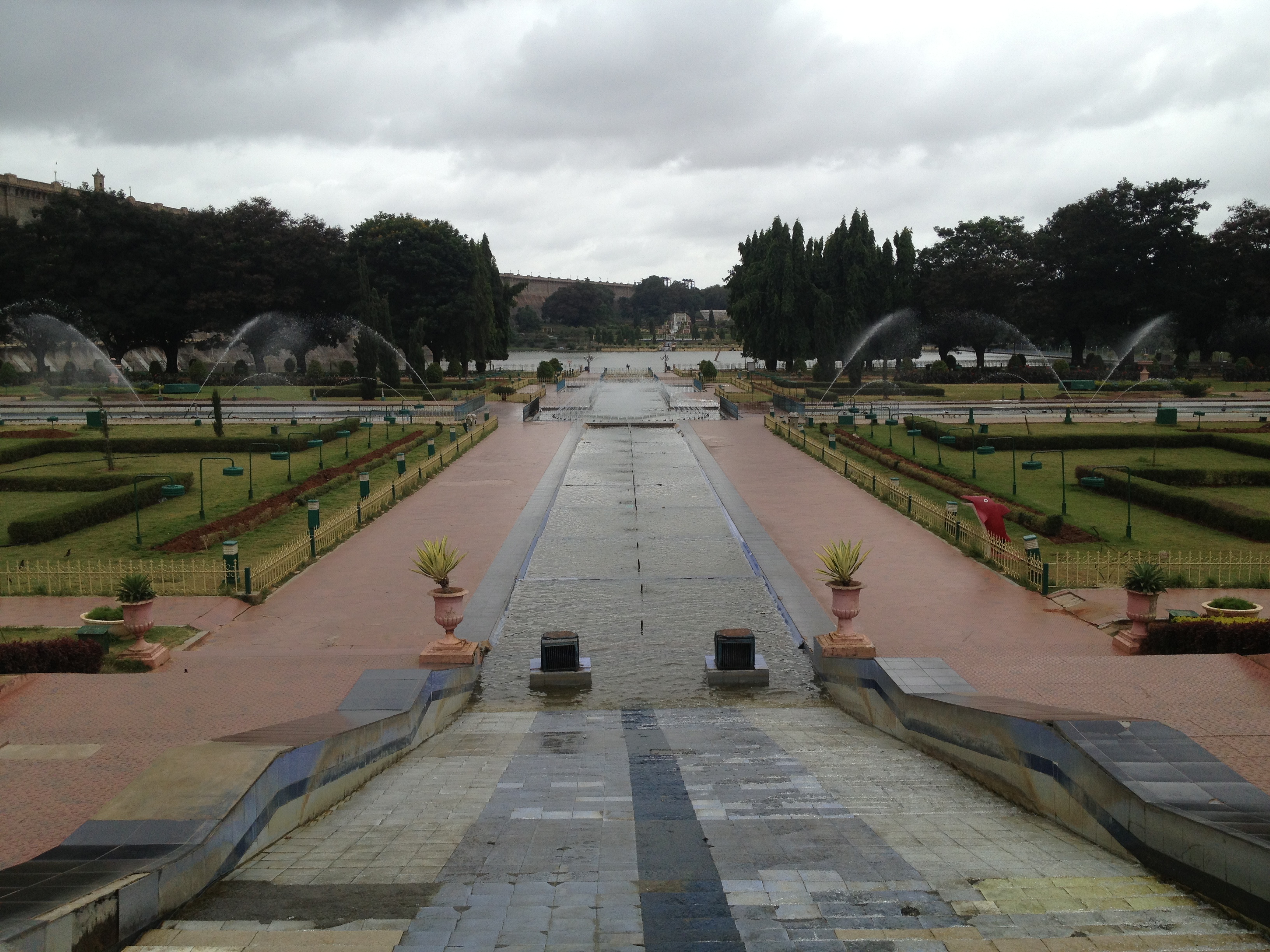
Our rooms had balconies over looking the gardens which are lovely. Apparently these gardens were a popular backdrop in classic “Bollywood” movies. (Actually, the movies filmed on this area are known as “Sandalwood” as opposed to Hollywood or Bollywood.) The gardens are in the mogul style — perfectly symmetrical with flowing water throughout.
IMG_2434
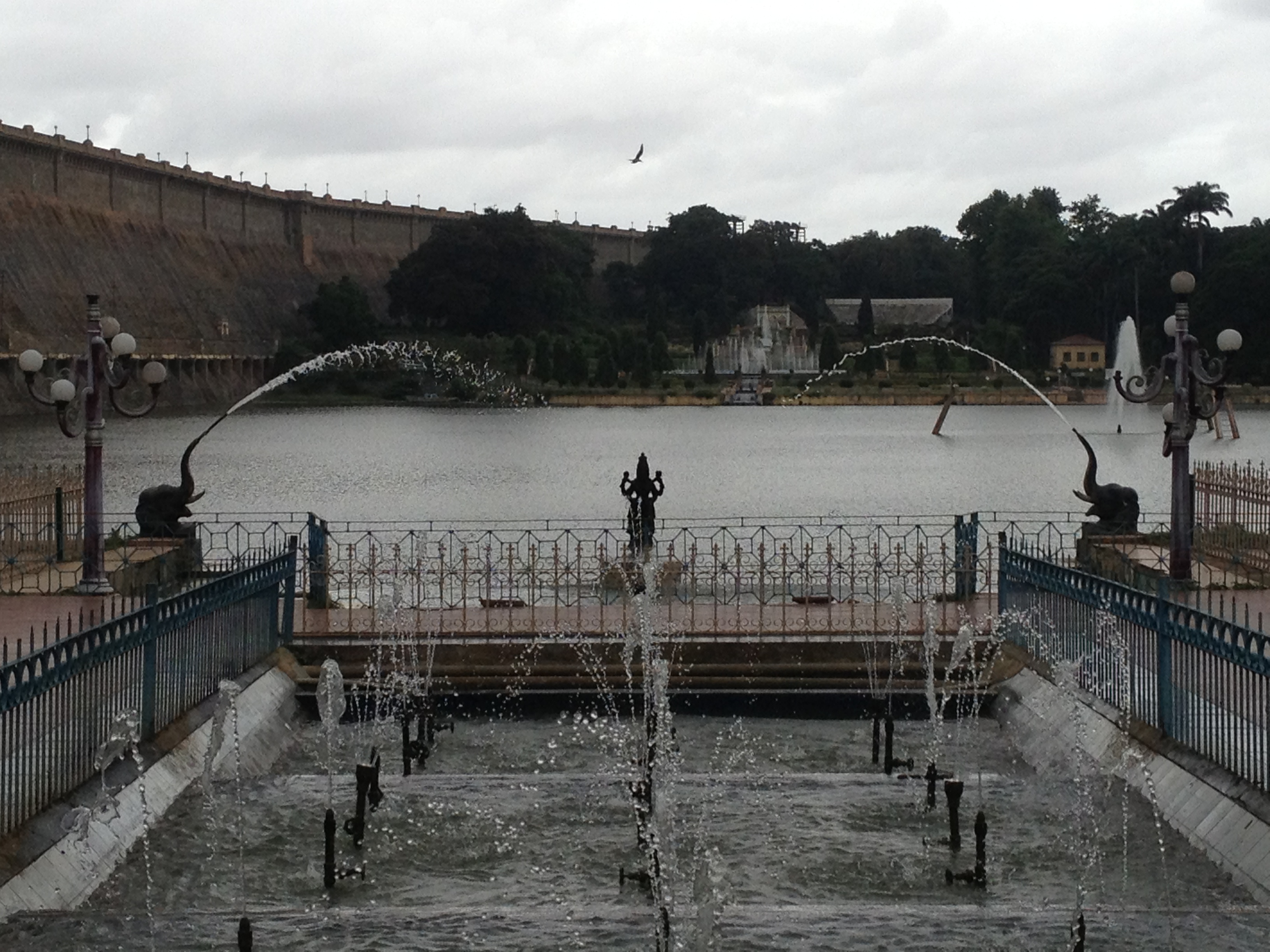
We arrived in time to see the light/water show in the amphitheater at the furthest end of the garden. Initially, I thought this would be a light/water show using the entire garden and its extensive fountains, but I was wrong. It’s just a small pool about 20′ x20′ with lights and water jets programed to change to the beat of popular Indian songs, many from films. The crowd loved it. I enjoyed the walk thru the garden at dusk.
IMG_2444.

The dam was built 1914-1915 and their are old photos from the dam’s construction in the halls is the hotel. (Engineers in full suits with safari helmets or turbans; so unlike modern construction sites anywhere today!) The politics of distributing water from the dam are a hot-button item today — hopefully good monsoon rains will recharge local aquifers and relief some tensions about the river water….
IMG_2446

Here’s a video:

Updated 7/16/2013 with photos and video.

2 Comments

Filed under Uncategorized

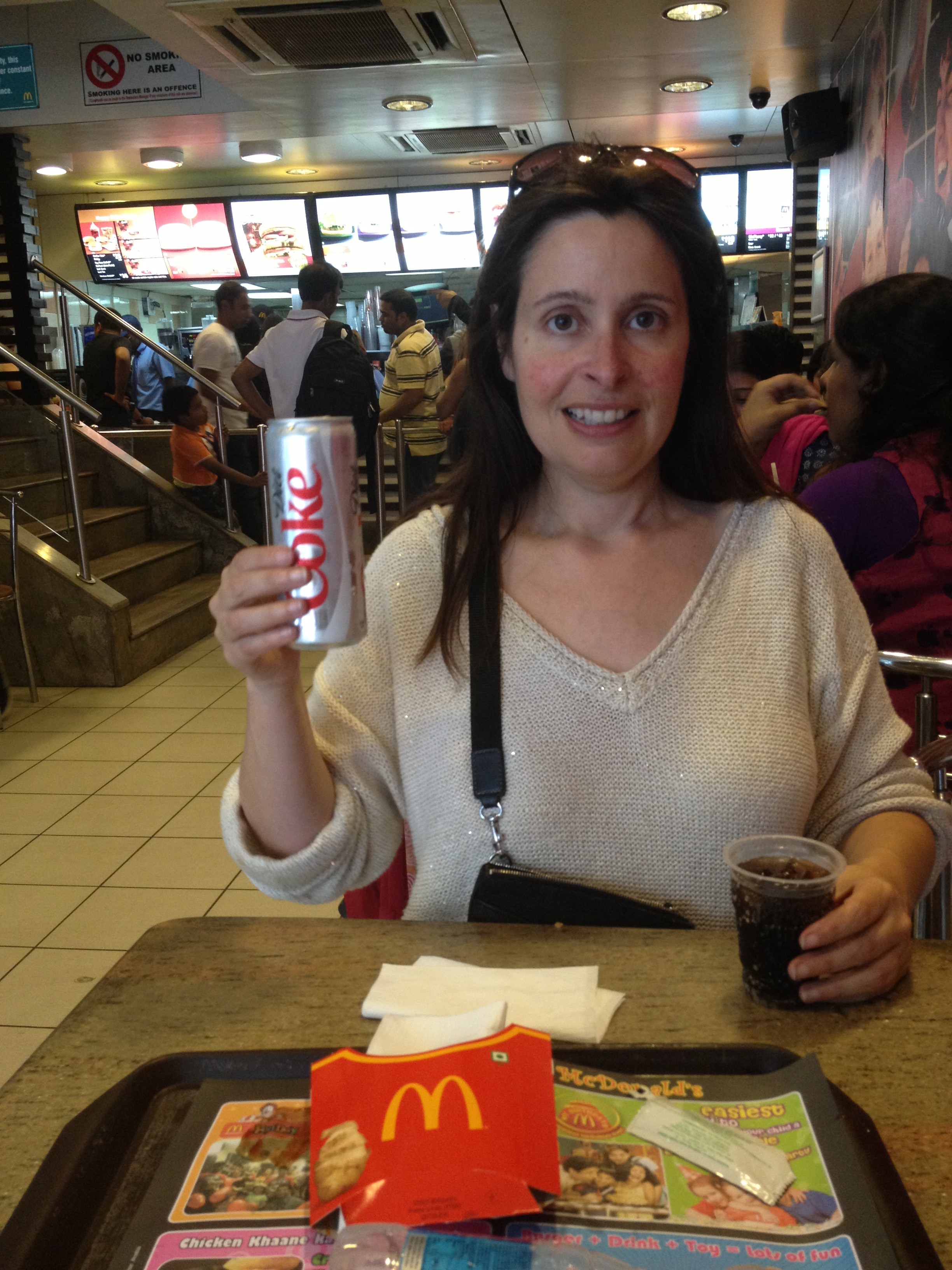
Hate to say it: McDonald’s

Diet Coke & Fries at McD's

Diet Coke & Fries at McD’s

My friend A is a fan of Micky D’s (she says that the one in Paris near the Arc de Triomphe is the best in the world). So, in the spirit of being a good hostess to my house guest — and to seek shelter during a passing thunderstorm — we had to visit a McDonald’s in India.

The menu is slightly different, with many more vegetarian options, the same chicken and fish options, some additional chicken ones with Indian flavors and, well, no hamburgers. The fries taste exactly the same (which, for some reason, I find unsettling).

Leave a comment

Filed under Uncategorized

Chamundeshwari Temple (for a Goddess!)

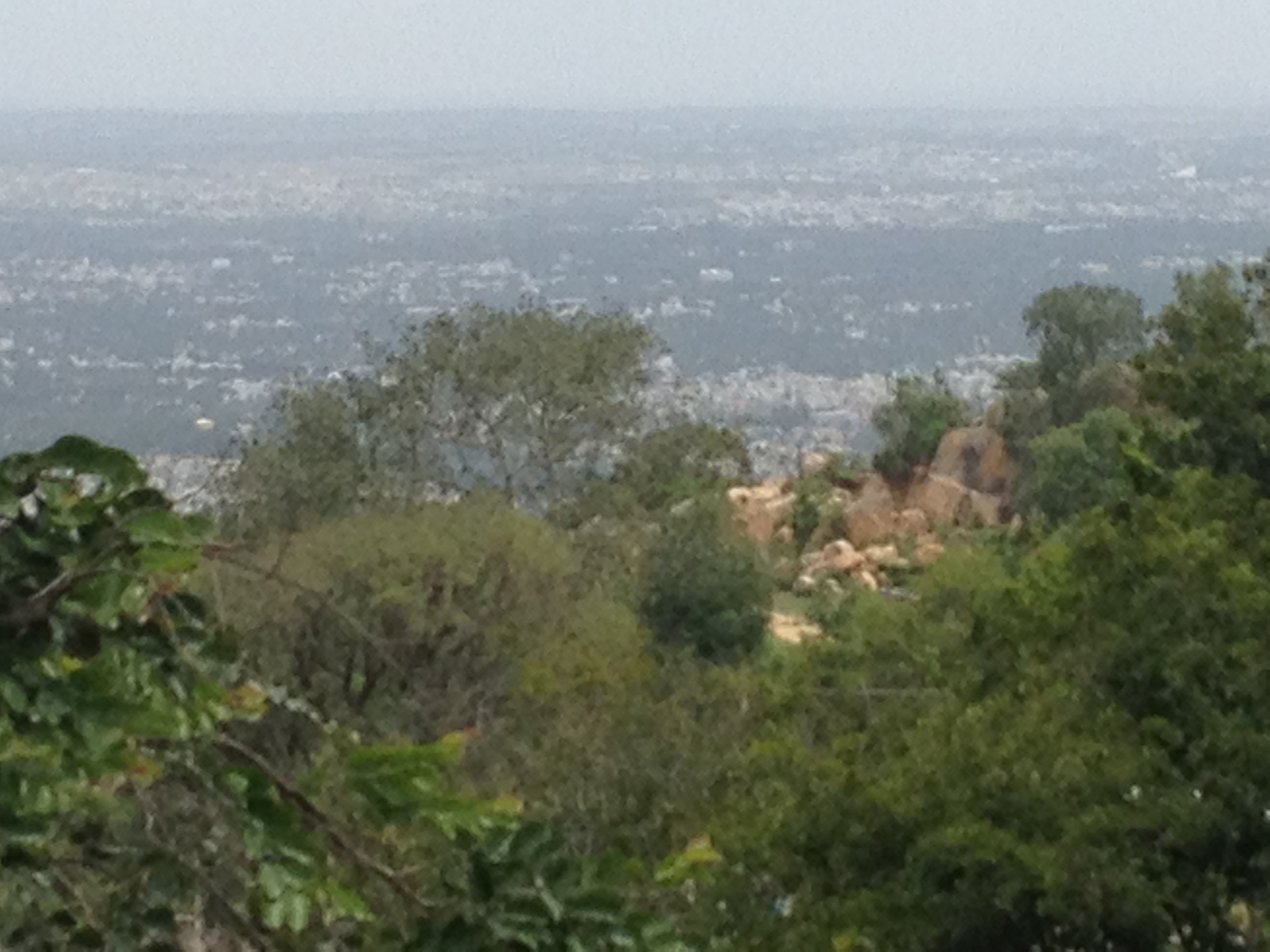
Chamundeshwari Temple is found at the top of the Chamundi Hills at about 3,500 ft in elevation. This is the view:

IMG_2471

And this is where you can shop for offerings to the goddess:

IMG_2470

The temple was named after Chamundeshwari or Durga, a goddess revered by the Mysore Maharajas. This goddess is like Wonder Woman: she is a demon-slayer and is depicted with several arms (up to 1,000!), weapons, etc and often riding a ferocious lion. She dispatched the evil demon Mahishur (from which current day “Mysore” gets its name; originally “Mahishur” before it was Anglicinized). Chamundi is a wrathful incarnation of Parvati (Lord Shiva’s wife). This temple was mobbed the Sunday we visited, so this fierce demon-slayer clearly has tons of devotees.

Inside the temple is a carved statue, a gift by the Mysore Maharaja 1659. The city of Mysore has a huge 9-day celebration, Dasara, for her every year when they take out the statue, put in her a golden throne (real gold!) on an elephant and parade her through town, among other elements of the celebration. This festival has been celebrated for over 400 years — I hope to make it there during my assignment.

IMG_2472 IMG_2462

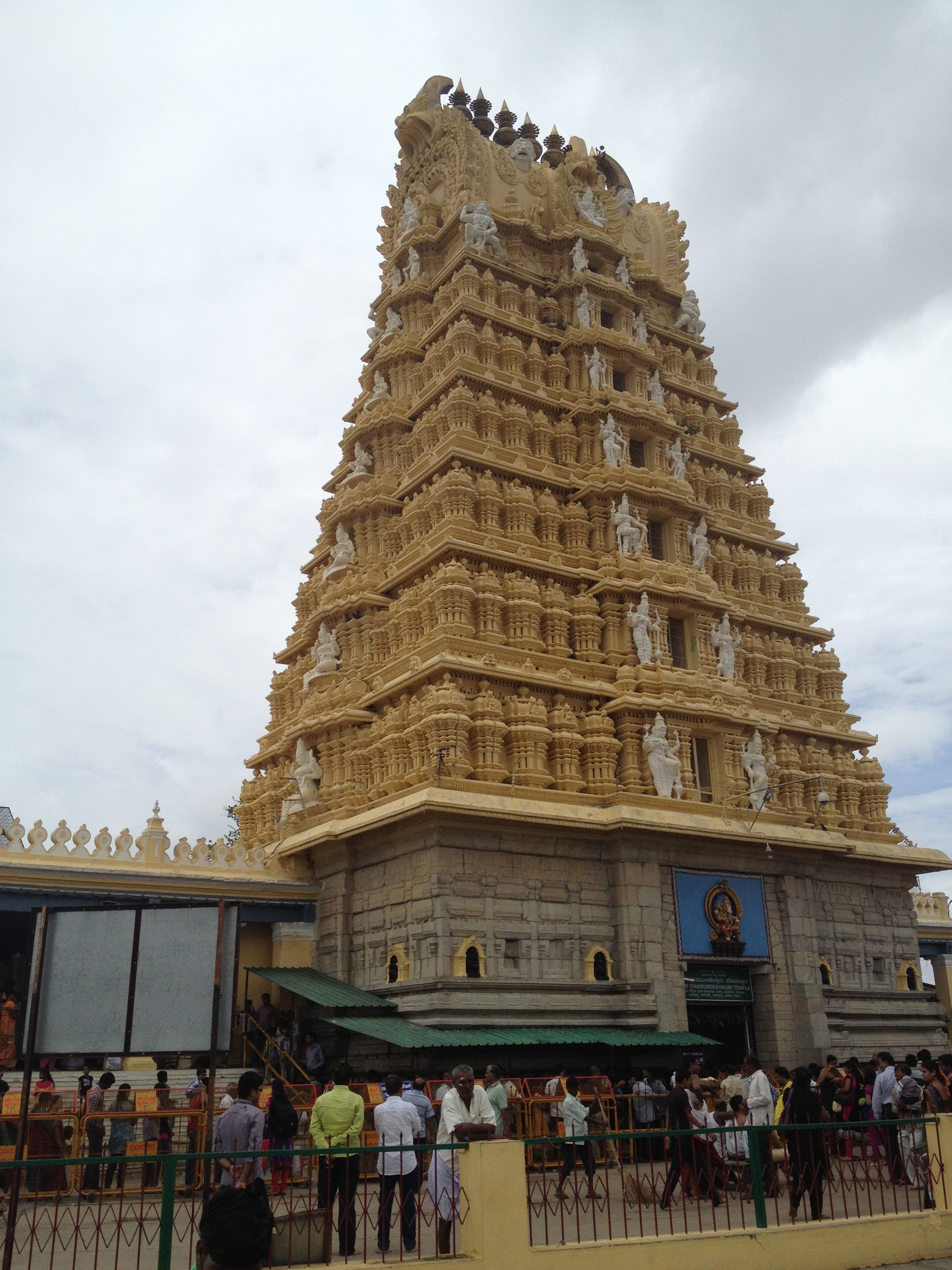
The tall pyramid tower crowning the temple is called a “Gopuram” and this one is considered a grand example of the Dravidian school of architecture. Gopurams are typical of Southern India — but they’ve made their marks else where, notably Angkor Wat. The fancy bobbles at the top are called “kalasam” and they are shaped like inverted pots. I’m not entirely sure what they are for, but I gather that they are key to ceremonies for renewing the temple.

With A -- goddess power!

With A — goddess power!

Leave a comment

Filed under Uncategorized

Oh! Calcutta!

Kolkata (formerly known as Calcutta*) in the morning, as viewed from my hotel room on a business trip.

20130711-051741.jpg
*Many cities in India have been renamed to undo the bastardisation of the original, indigenous names by the British under colonisation. Calcutta became (or perhaps it is more politically correct, to say “reverted back to”) Kolkata in 2001; Bombay to Mumbai in 1995; Madras to Chennai in 1996. Bangalore has been proposed for renaming to Bengaluru but I am a little fuzzy on the official status of that (although the airport is officially named as “Bengaluru International Airport”). Despite these changes, use of the colonial names persists in common speech, signs, maps, news reports, etc. so in effect many places have 2 practically interchangeable names today.

Leave a comment

Filed under Uncategorized

Bull Temple Part 2 (Mysore)

We visited the Bangalore Bull Temple when I came to find housing in March. So, for the sake of symmetry if nothing else, I HAD to see the Mysore Bull Temple. It is located high above Mysore in the Chamundi Hills.

IMG_2484 IMG_2485

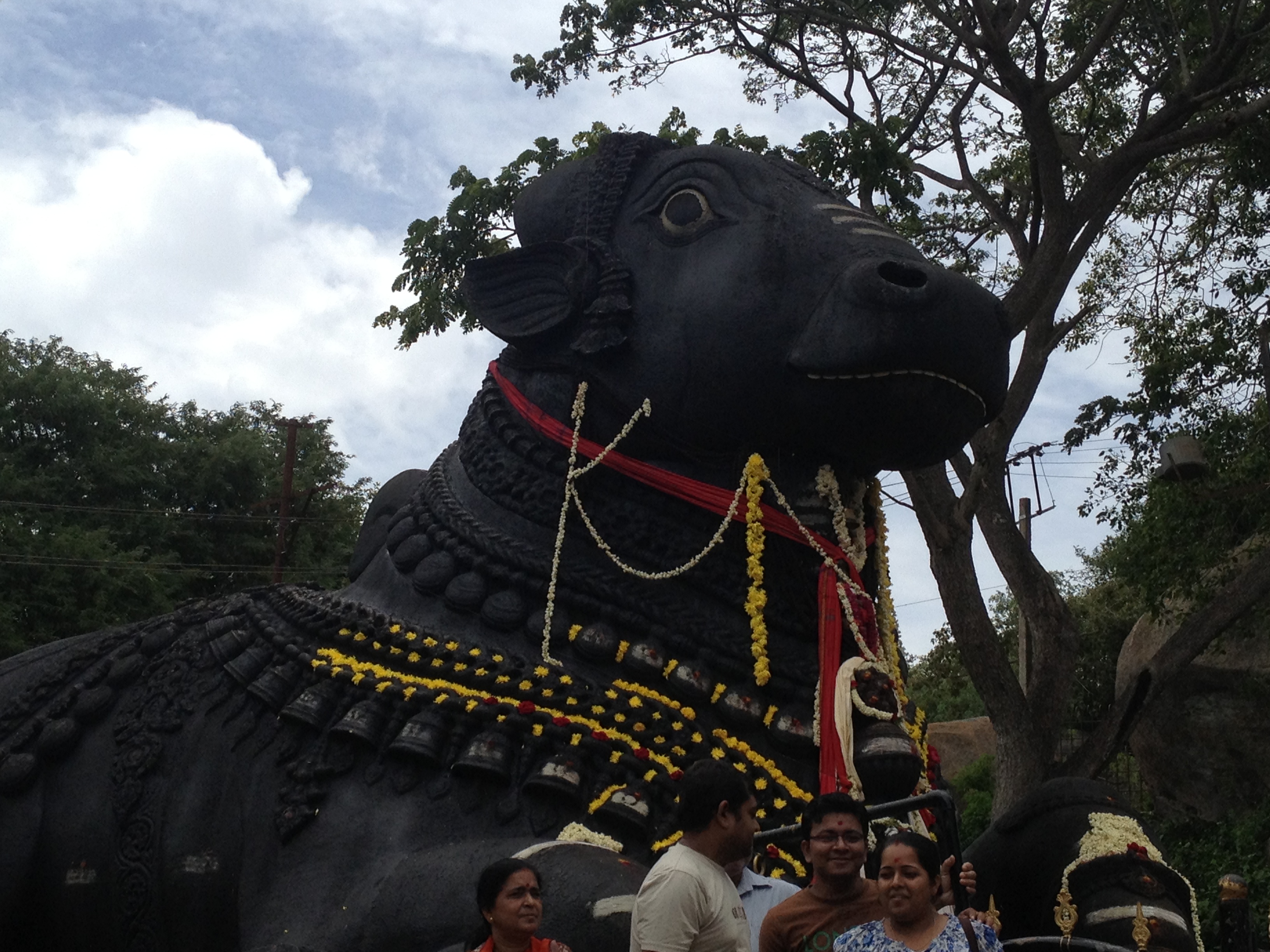
The bull temple is for Nandi, the bull who was (is?) the God Shiva’s mount/vehicle/”vahana.” I gather that Nandi also served as gatekeeper and body guard for Shiva, too. (Bouncer to the gods!) Most temples to Shiva have a statue of Nandi facing the main shrine, but there are a few temples — like this one –where Nandi gets the focus. (When worshipping Shiva at a temples dedicated to him, I gather you first pray before the Nandi statue then move on to the Shiva idols.) Apparently, Nandi is rather unique because most of the God’s mounts don’t get temples focused on them.

My friend likes this bull because she thinks he’s grinning at us. I do like that idea!

On the way back to the car, this kid appeared, dressed as a god. There was some debate as to exactly WHICH god, because his attire & crown suggested Hanuman, but his face paint wasn’t the right color for that god and he had no tail. You see, Hanuman was a vanara, or monkey-like humanoid, so the tail would have sealed the debate.  I should have asked the kid who he intended to be!! Logically, Hanuman makes sense at the Bull Temple because Nandi predicted that the evil demon king Ravana’s kingdom would be burned down by a monkey, and Hanuman did just that.  Anyhow, the kid was super cute and I decide his theatrical efforts warranted a few rupees (I rationalized that he was more akin to a street entertainer than a beggar).

IMG_2487

2 Comments

Filed under Uncategorized

Mysore Palace

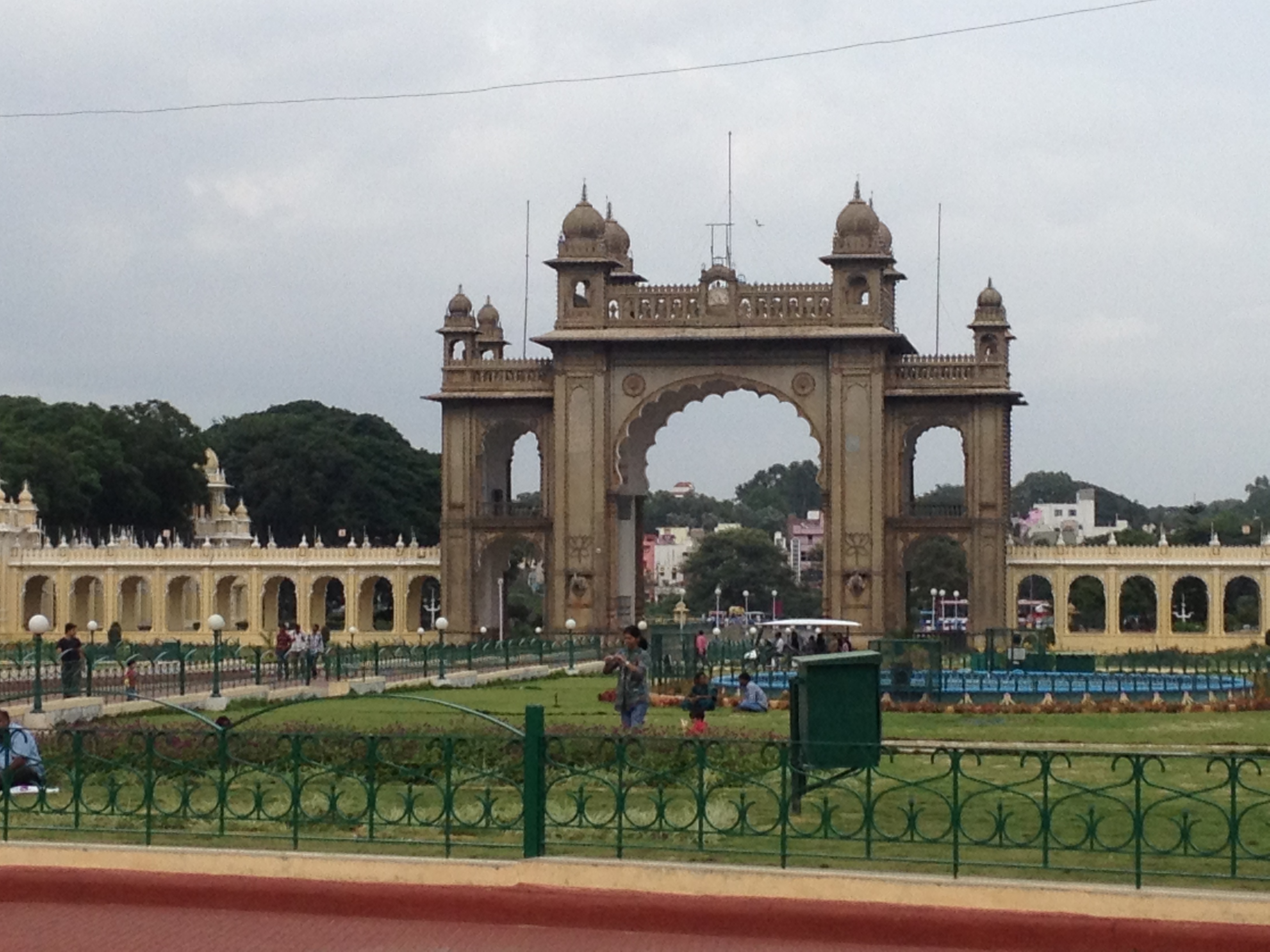
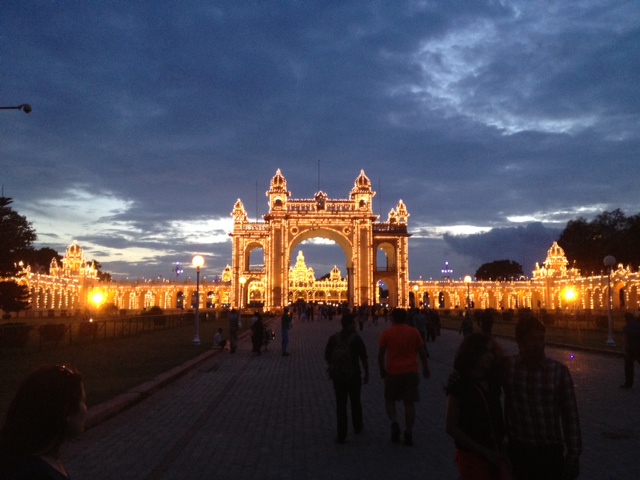
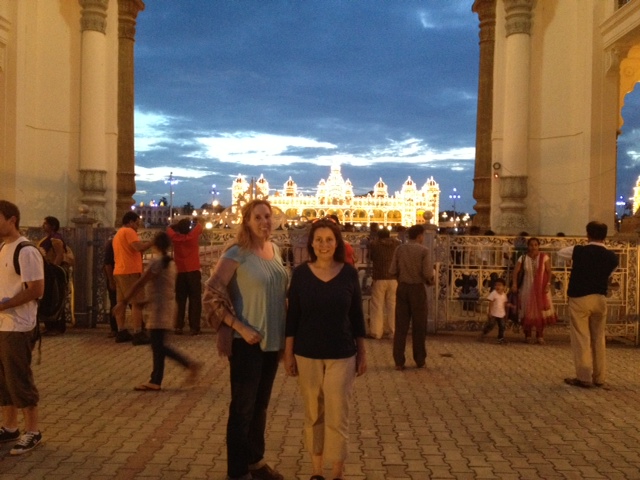
One Sunday we toured Mysore Palace and stayed to watch it illuminated at night.

IMG_2490 IMG_2491 IMG_2495 IMG_2501

The tour was a bit of a nose-to-tail trail ride. Firstly, there were lots of rules — no photos, no shoes.  Secondly, visitors were funneled into the viewing areas and lead around by velvet ropes. Except in the open spaces (e.g., ballroom), it was quite crowded and the crowd was quite pushy. Oddly, local tourist kept poking at things — pushing (hard!) on the oil paintings, knocking on the inlayed doors, trying to pry at modelings. I was surprised that people didn’t treat the palace with more respect.

While the craftsmanship of many things in the palace was spectacular (e.g., the stained glass paneled dome, the columns in the ball rooms, the carved metal doors, the inlayed rosewood), I do not think I share the Mahaarja’s taste in interior decorating. The palace was built from 1897- 1912 and does reflect the Gilded Age design trends — French lamps, European crystal chandeliers, etc.  It seemed a little… um… Graceland.  (Listen, you never know when the Maharaja may invite me over to dinner, so I’m not saying anything more.)

But I did enjoy seeing it lighted at night — that was pretty cool. {UnclEd, it made me think of your parliament building in Victoria!}

Leave a comment

Filed under Uncategorized

MTR, Bangalore’s Oldest Resturant

Everyone loves MTR. It’s an institution: the oldest restaurant in the city, it has been around since 1924. From the highest executives at my company to my driver, everyone tells you to go to MTR for real, authentic South Indian/Bangalorean food. Of course, few could tell me what MTR actually stands for (“Mavalli Tiffin Rooms”). It is so popular that there are now several branches, but the original is the most beloved. It takes no reservations and there is always a wait. Reminds me of Galatoire’s in New Orleans.

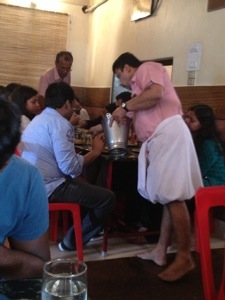
Well, up until you see the barefoot waiters…

20130708-222819.jpg

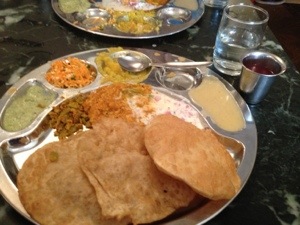
But I have to agree with everyone: the food is amazing. The flavours are yum and you get to taste every dish, as it’s served thali style. (You get a large, divided plater and the waiters walk around serving each course to the entire room, one diner after the next.)

20130708-222957.jpg

<
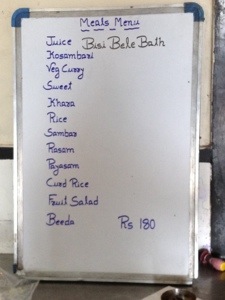
If you want more, they’ll give you seconds. But that is hard to imagine, there is more food than anyone could possibly eat. This was the menu the we visited (all veg):

20130708-223636.jpg

Leave a comment

Filed under Uncategorized